Playdate - Part 3
Impressions So Far⌗
I’ve spent a few evenings on Playdate development now - picking up coding again after a many-year break. It really is a joy to code for the Playdate. The specs of the machine are great - a generous 16Mb RAM means no need to worry to much about cramming every byte with data. A modern 32-bit processor without too many quirks. The toolchain is pretty-much plug-n-play, getting code running on device just worked following the SDK instructions. But the 1-bit screen at roughly VGA res means a fair amount of creativity is needed to get anything worth playing out of it.
Click for the rest of the post, with a quick vidoe demo of a prototype game.
Prototype⌗
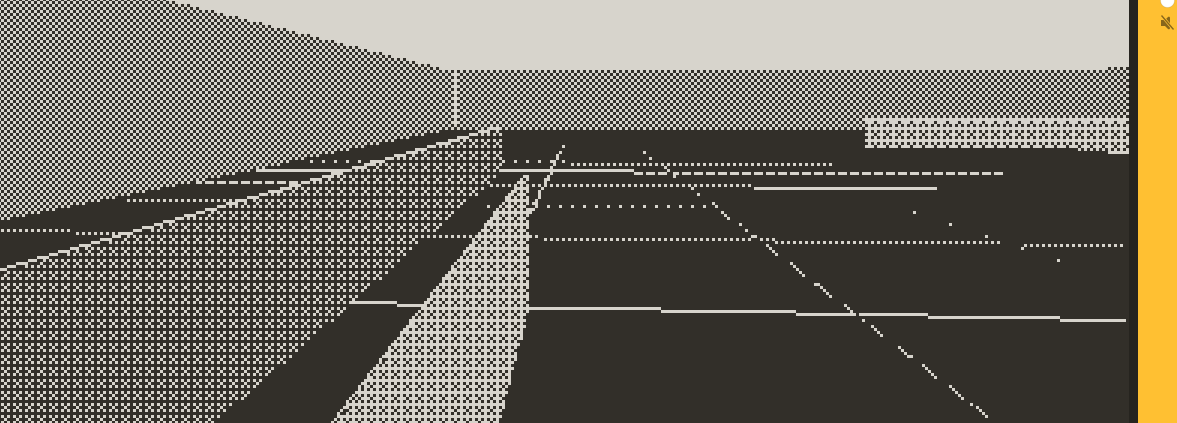
- I developed a sort of proof-of-concept Lightbikes game. 2 players, 1 of which is computer controlled.
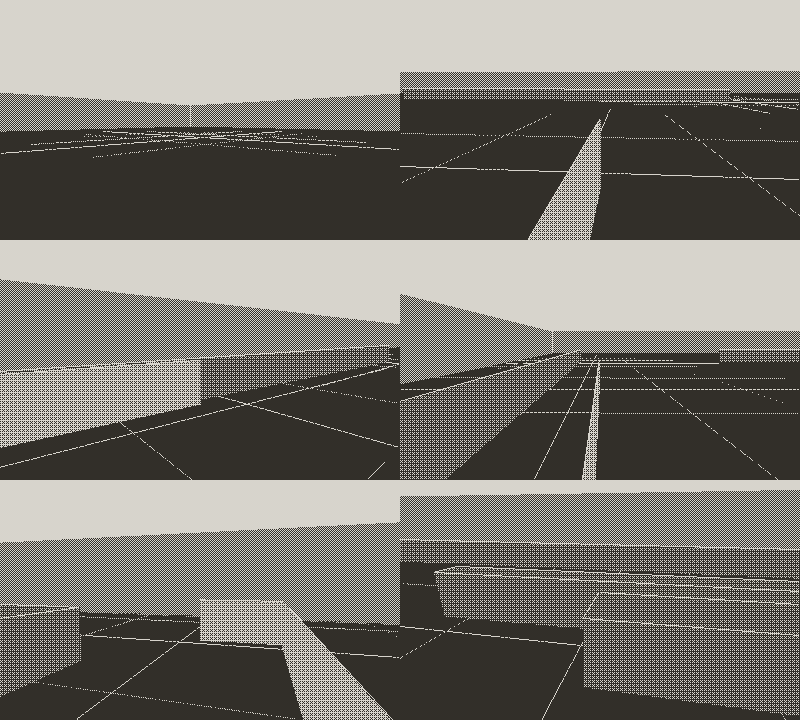
- All the rendering is from base principles - pixels / lines / triangles.
- I used a 2d axis-aligned BSP tree to store the line segments, allowing for quick collision detection and rendering in back-to-front order. Every time a player turns, a new segment is inserted into the BSP tree, causing the existing segments to be split. This means the world gets more and more complex as the game progresses. The playdate can handle this at 30fps until there are about 200 trail segments, which is about 2000 triangles.
- I’m not going to take this prototype any further - I don’t think the approach to rendering is ever going to be fast enough, and I don’t want to get involved in trying to make this multiplayer.
Demo video⌗
A quick and dirty video of my first proto-game on the Playdate…
Read other posts